
Heat
High outdoor temperatures raise head pressure and make the outdoor coil work harder to reject heat. Components already weakened by age tend to reveal themselves on the hottest afternoons rather than in mild weather.
Orlando · Central Florida Cooling
Need help with an AC system that is not cooling properly? Explore Orlando air conditioning repair options, common AC problems, repair cost factors, and service information for homes throughout Orlando and nearby communities.
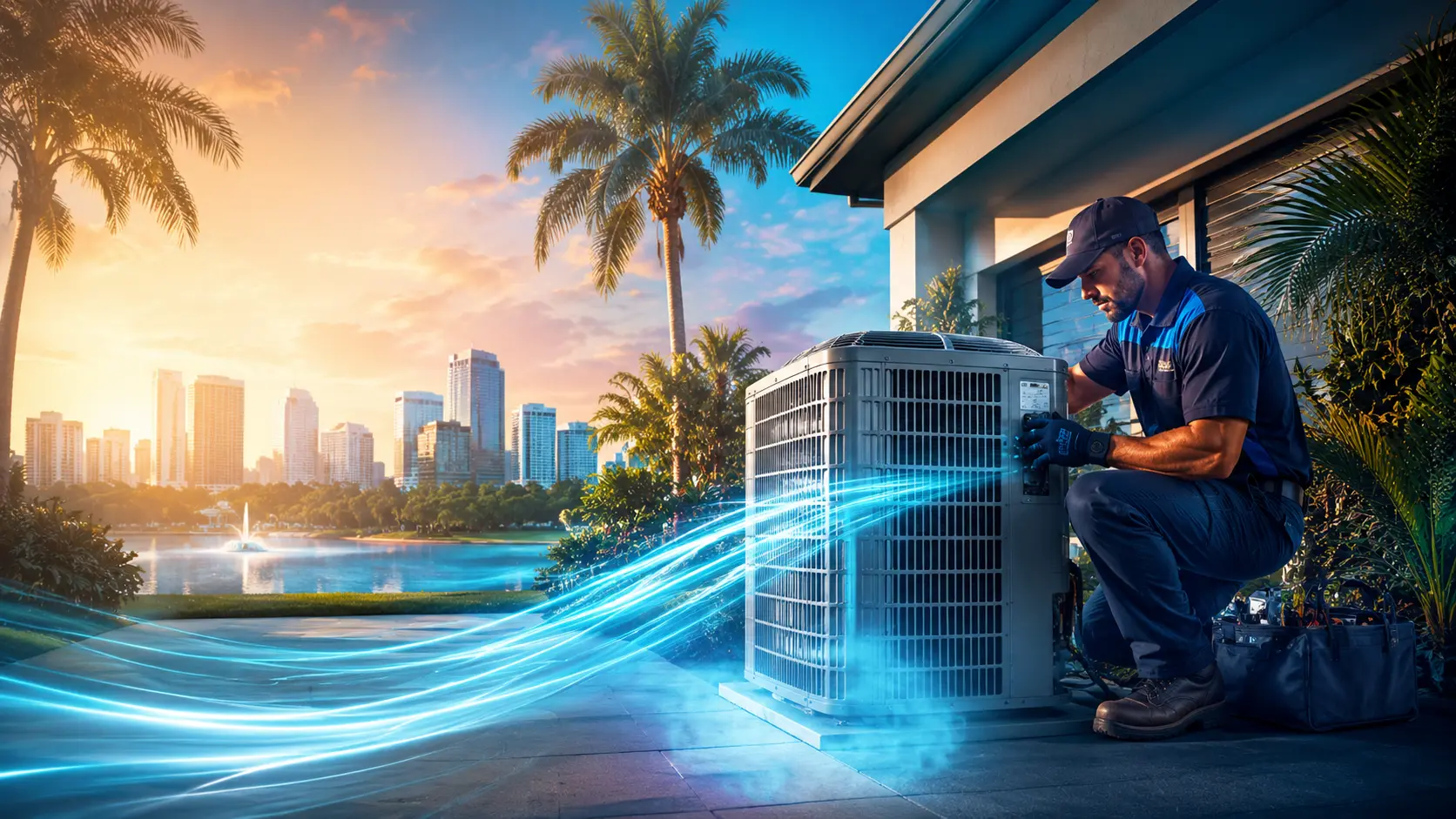
Diagnostic Panel
Choose the symptom that best matches what you're experiencing.
Select a symptom above to see possible causes, what a technician may check, and where to read more. This tool does not confirm a diagnosis.
Repair Coverage
Cooling failures usually trace back to one of a handful of systems: electrical controls, the refrigerant circuit, airflow, drainage, or the compressor itself. Each area below has its own page with symptoms, diagnostic approach, and cost factors.
General diagnosis and repair of residential cooling systems in Orlando.
What to do when a home loses cooling during Central Florida heat.
Leak search, repair considerations, and why topping off alone rarely lasts.
Start components, electrical faults, and when replacement enters the conversation.
Airflow and charge problems behind ice on the coil or refrigerant lines.
Capacitors, contactors, control voltage, and safety switch faults.
Condensate blockages, pan overflow, and float switch shutdowns.
Control power, wiring, configuration, and placement problems.
Head units, line sets, and communication faults on ductless systems.
What routine service covers and how it affects Orlando run times.
Sizing, efficiency, and refrigerant considerations for new equipment.
What drives the price of a repair and how to compare options.
Planning Tool
Set four details about your system and situation to see a broad planning range for repair work in the Orlando area.
Estimated Planning Range
$150–$700
This calculator provides a general planning estimate only and is not a quote. Actual repair cost depends on the specific diagnosis, equipment, parts, accessibility, labor requirements, and system condition.
Refrigerant type, part availability, warranty coverage, and whether a repair addresses a symptom or the underlying cause can move a repair toward either end of the range. Read the AC repair cost guide for a breakdown of the factors.
Local Conditions
Cooling equipment here does not get a long off-season. Systems run heavily from spring into fall, and even mild months bring humidity that keeps the equipment cycling. That pattern shapes which parts wear out first and why some failures repeat.
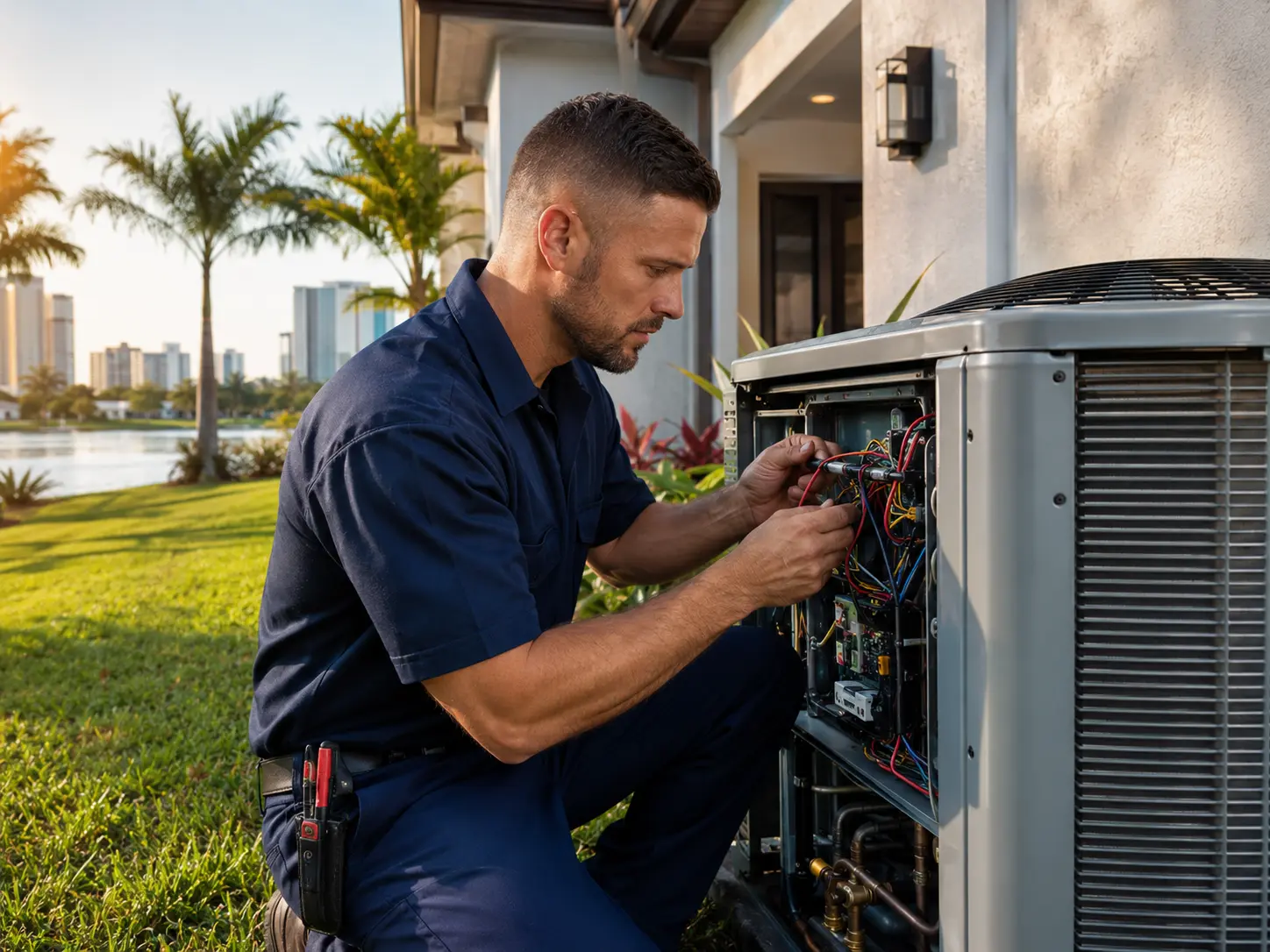
High outdoor temperatures raise head pressure and make the outdoor coil work harder to reject heat. Components already weakened by age tend to reveal themselves on the hottest afternoons rather than in mild weather.
A large share of an Orlando system's capacity goes toward removing moisture. Latent load keeps coils wet, extends run times, and is why a home can hit its setpoint and still feel damp when airflow or charge is off.
Equipment accumulates run hours over most of the year. Capacitors, contactors, blower bearings, and fan motors age in operating hours, so a system here reaches wear thresholds faster than the same unit in a cooler climate.
Wet coils produce steady condensate that must drain reliably. Biological growth in drain lines is a routine maintenance item, and a blocked line can shut a system down through its float switch long before it floods anything.
Condensers sit through sun, storms, landscaping debris, and lawn clippings. Coil fouling reduces heat rejection, and vegetation crowding the unit restricts the airflow it needs to operate at design conditions.
Filters load faster during heavy run periods, and attic ductwork faces high ambient temperatures. Restricted airflow shows up as weak vents, uneven rooms, ice on the coil, and higher operating cost.
Blueprint
Select any component to see what it does, the symptoms associated with it, and the checks a technician may perform.
Decision Tool
Answer six questions to see which direction the numbers lean. This is a discussion starter, not an engineering recommendation.
Result
Based on what you selected, the repair amount appears modest relative to the system's remaining service life, and the performance issues you described are commonly correctable. A single well-diagnosed repair often restores normal operation.
A technician should confirm the actual failure before either path is chosen. Ask what failed, what caused it, and whether the repair addresses the cause or only the symptom.
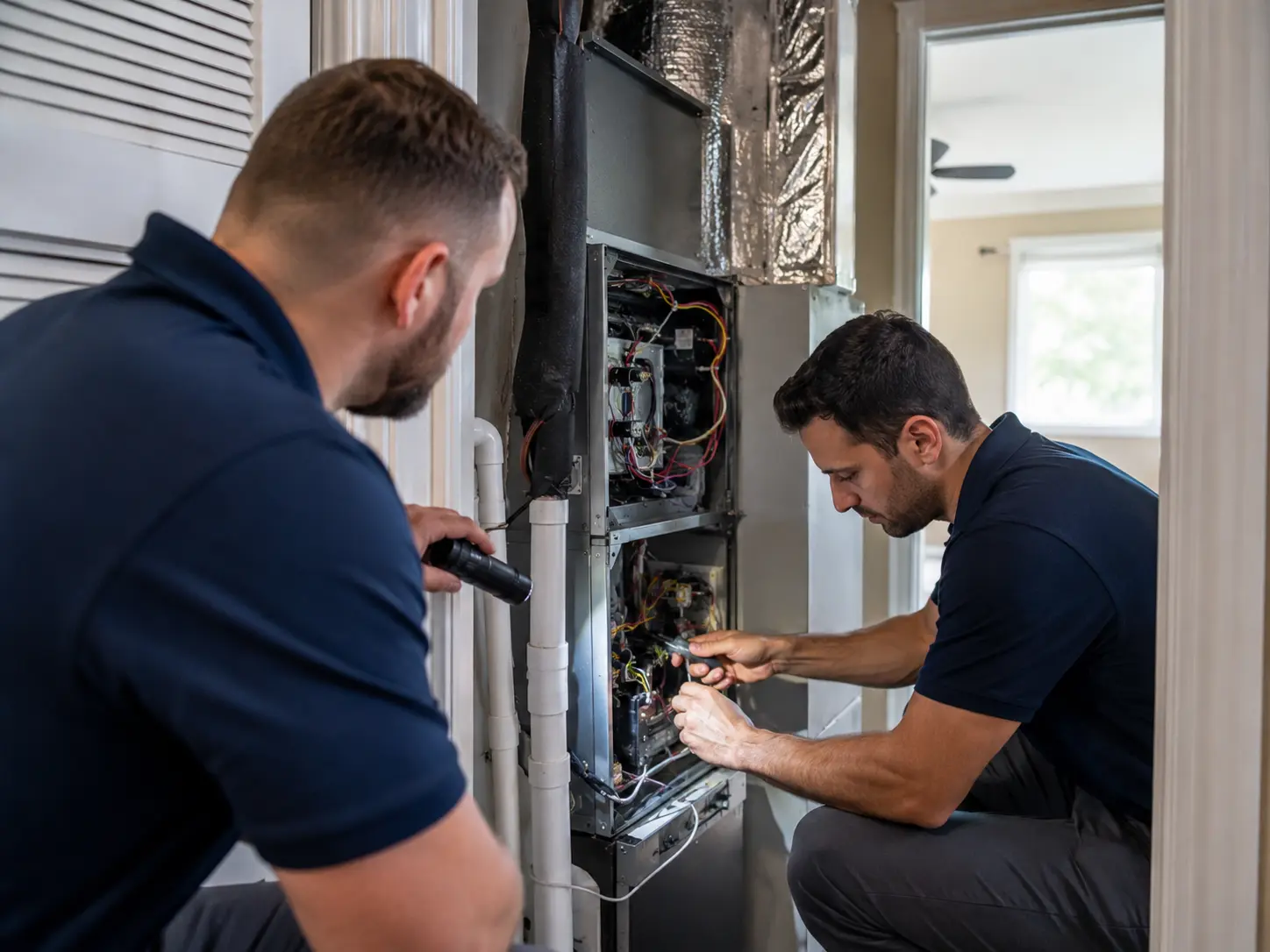
Symptom Patterns
A system that keeps up in the morning and loses ground by mid-afternoon is often near the edge of its capacity. Charge problems, coil fouling, and airflow restriction all show up this way before they cause a hard failure.
This separates the blower from the cooling cycle. If the outdoor unit is silent, attention moves to electrical components and controls. If it runs and the air is still warm, refrigerant and compressor performance come into focus.
Intermittent operation often points to a safety control opening and resetting, a marginal start component, or a drain float that trips when condensate backs up and clears once the water level drops.
Short run cycles remove less moisture. Oversized equipment, thermostat placement, and airflow that is too high across the coil can all leave a home cool but clammy.
Service Sequence
Providers differ, so treat this as a general outline. A typical repair visit may include the following.
You explain what the system is doing, when it started, and anything that changed. Details like ice on the lines, a breaker that tripped, or water on the floor narrow the search quickly.
A technician inspects the indoor and outdoor equipment, looks at airflow and filter condition, and takes electrical and refrigerant readings appropriate to the symptom.
Findings are described in plain language: what failed, what appears to have caused it, and whether anything else is contributing to the problem.
Options and their trade-offs are reviewed, including whether a part repair is a durable fix or a temporary one on an aging system.
Work proceeds only after you approve it. Ask what is included, what is not, and what happens if a second failure is found once the first is corrected.
After the repair, the system is run and checked so temperatures, airflow, and electrical readings can be confirmed before the visit ends.
Transparency
Plain explanations of what fails, why it fails, and what a technician evaluates.
Pages organized around symptoms homeowners actually notice, not sales categories.
Content written for Central Florida run times, humidity, and drainage realities.
A visible phone number and a short request form on every page.
Planning ranges with the variables that move them, rather than a single number.
Both directions explained so the conversation with a technician is informed.
Central Florida Operation
Equipment decisions that make sense in a dry or seasonal climate do not always translate here. Moisture removal, drainage reliability, and outdoor unit exposure carry more weight in Orlando than raw capacity.
The U.S. Department of Energy and ENERGY STAR publish general guidance on cooling equipment and maintenance that pairs well with the local details covered here. Read the Orlando AC maintenance guide for a seasonal checklist.
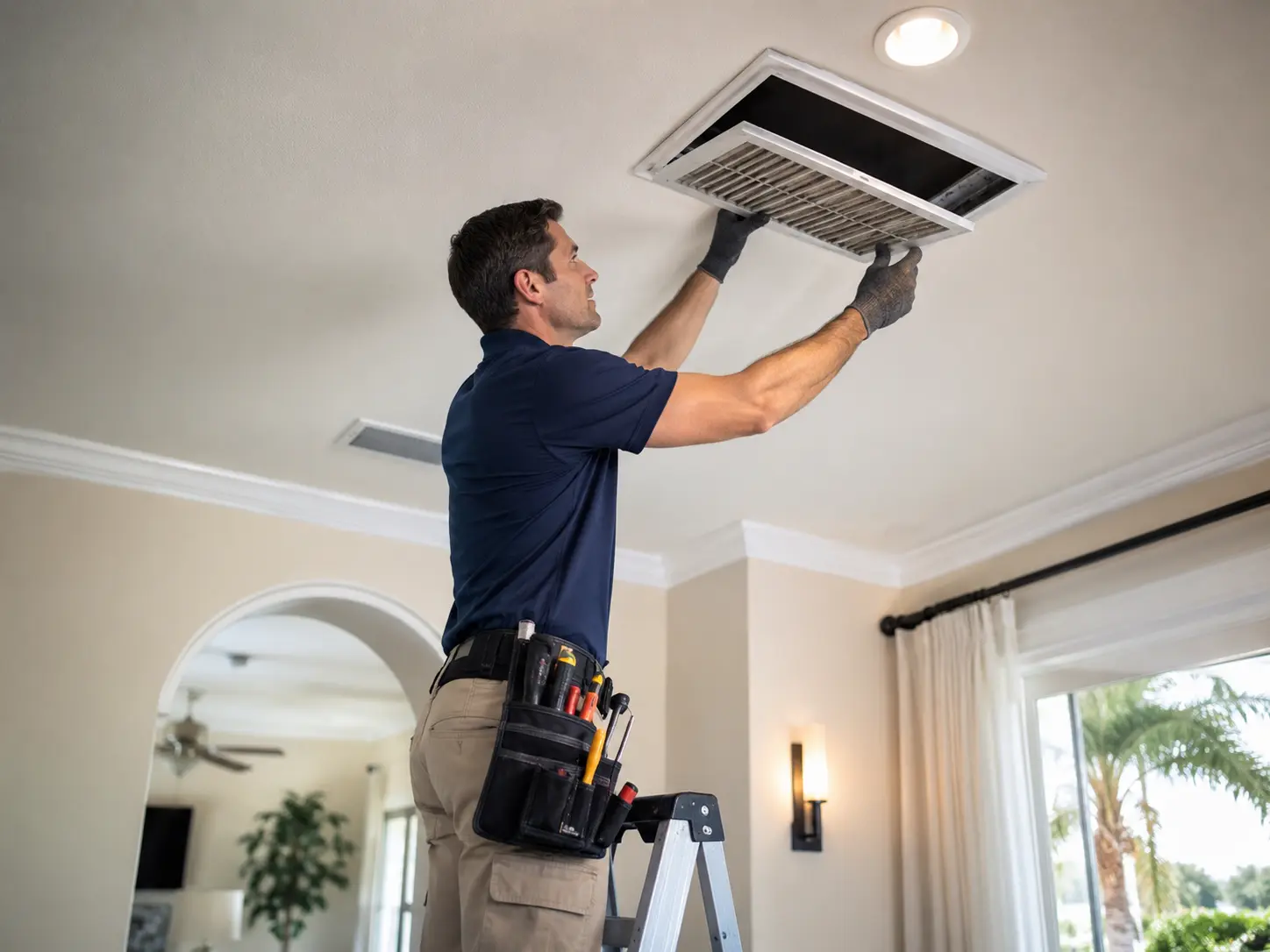
Coverage Map
Neighborhood pages cover the housing patterns, cooling load, and equipment considerations that come up in each part of the Orlando area.
Pricing Reality
Two homes with the same symptom can receive very different invoices. The spread comes from the specific failure and from conditions around the equipment rather than from the symptom itself.
The full breakdown lives in the AC repair cost guide, and the replacement side is covered in repair versus replacement considerations.
Reference Table
| Symptom | Possible causes | Common checks | Related guide |
|---|---|---|---|
| Warm air from vents | Outdoor unit not running, refrigerant loss, failed capacitor, thermostat mode | Confirm condenser operation, measure pressures, verify control signal | AC blowing warm air |
| Ice on coil or lines | Restricted airflow, dirty filter or coil, low refrigerant charge | Thaw system, inspect filter and blower, verify charge and airflow | frozen AC coil repair |
| System will not start | Tripped breaker, open float switch, blown low-voltage fuse, failed transformer | Control voltage, safety switches, condensate drain, disconnect | AC electrical repair |
| Water around indoor unit | Blocked condensate drain, clogged pan, thawed coil, failed trap | Clear and test drain line, inspect pan and float switch | AC drain line repair |
| Weak airflow | Loaded filter, dirty blower wheel, duct leakage, crushed flex run | Static pressure readings, blower inspection, duct review | why an AC is not cooling |
| Short cycling | Airflow restriction, charge problems, oversizing, safety control tripping | Run-time review, pressures, thermostat location and staging | common AC problems |
| Strange noise | Contactor buzz, motor bearings, loose panel, compressor distress | Isolate sound source, inspect motors and electrical parts | AC compressor repair |
| High cooling bills | Longer run times, coil fouling, duct losses, aging equipment | Performance evaluation, airflow, maintenance and replacement discussion | repair versus replacement considerations |
Site Index
Answers
Most residential AC repairs in the Orlando area fall into a broad planning range, from around $150 for a minor electrical part or drain clearing to several thousand dollars for compressor work on a large system. The variables that matter most are the failed component, refrigerant type and quantity, part availability, accessibility of the equipment, and whether the underlying cause is corrected along with the symptom.
When the blower runs but the air is not cold, the cooling cycle itself is usually interrupted. That points toward the outdoor unit not operating, a refrigerant charge problem, a coil that is iced or heavily fouled, or a control issue keeping the compressor off. Confirming whether the outdoor unit is running is the fastest way to narrow it down.
Ice forms when the evaporator coil gets colder than it should, which usually traces back to restricted airflow or low refrigerant charge. A loaded filter, a dirty blower wheel, closed registers, or a leak in the refrigerant circuit are common contributors. Running a frozen system adds stress to the compressor, so shutting cooling off and letting it thaw is the safer step.
Indoor units remove large amounts of moisture from Orlando air, and that water must drain away. A blocked condensate line, a clogged pan, a failed trap, or a coil that froze and thawed will all put water where it does not belong. Many systems have a float switch that shuts cooling down when the pan fills, which is why a drain problem sometimes looks like an electrical failure.
Yes. A thermostat that loses power, has failed batteries, is wired incorrectly after a replacement, or is configured for the wrong equipment type can prevent a cooling call from reaching the system. A thermostat mounted where sunlight or a supply register hits it can also cause odd cycling even when the equipment is healthy.
Symptoms associated with compressor trouble include hard starting, a loud hum with no start, repeated breaker trips, grinding sounds from the outdoor unit, and cooling that fades under load. Only electrical and pressure testing can confirm it, and because the compressor is the most expensive component, the diagnosis is worth explaining in detail before repair work is approved.
The decision usually turns on age, the size of the repair, how often repairs have occurred, and how well the system cools when it does run. A modest repair on a system under ten years old is often reasonable. A large repair on a system past fifteen years, especially with repeat failures, is worth weighing against replacement.
Short cycling can come from restricted airflow, refrigerant charge problems, a safety control opening and resetting, a thermostat placed in a poor location, or equipment that is oversized for the home. Frequent starts are hard on electrical components, so it is worth investigating rather than living with.
Confirm the thermostat is set to cool with a setpoint below room temperature, look at whether a breaker has obviously tripped, check whether the filter is loaded, and look for standing water near the indoor equipment. If you notice burning smells, smoke, or severe electrical symptoms, turn the system off and call for service rather than investigating further.
A large share of the work an AC system does here is removing moisture rather than lowering temperature. That means heavy condensate volume, wet coils for long stretches, and drainage components that stay under load for most of the year. Humidity is also why a system can hold the thermostat setpoint and still feel clammy indoors.
It can. Many air handlers use a float switch that interrupts the cooling call when the drain pan fills. From the thermostat, that looks like a system that simply will not run, even though the actual problem is a blocked drain.
Weak airflow generally comes from restriction somewhere between the return and the register: a loaded filter, a dirty blower wheel, a collapsed or disconnected flex duct, closed registers, or an undersized return. Ice on the coil also blocks airflow and can make a healthy blower seem weak.
Describe what your system is doing and get repair information for your Orlando home.